
25 Easy Tips to Keep White Bedding Bright All Summer Long

There is something really satisfying about sleeping on a clean, bright white bed. But keeping white bedding bright all summer long can feel like an uphill battle when the heat, sweat, and sunscreen start taking a toll on your linens. The good news is that with a few simple and consistent habits, you can maintain that crisp, hotel-quality look without spending a fortune. From laundry tweaks to smart storage habits, these practical tips make the job much easier.
Summer is the toughest season for white sheets because of increased sweating, outdoor activities, and heavier use of skincare and tanning products. All of these things transfer to your bedding while you sleep and, over time, slowly cause yellowing and dullness. The tips in this article are easy to follow, use everyday household items, and really do work. Whether you are dealing with slightly grey sheets or want to stay ahead of the problem, there is something here for every home.
1. Wash White Bedding in Cold Water

Cold water is gentler on white fabric fibers and helps prevent yellowing over time. Hot water can set stains and break down the fabric’s weave more quickly, making sheets look dull. Washing in cold water also saves energy, so it is a win for your wallet and your bedding. Make this a regular habit every time you launder your whites.
2. Use a Gentle Detergent Made for Whites
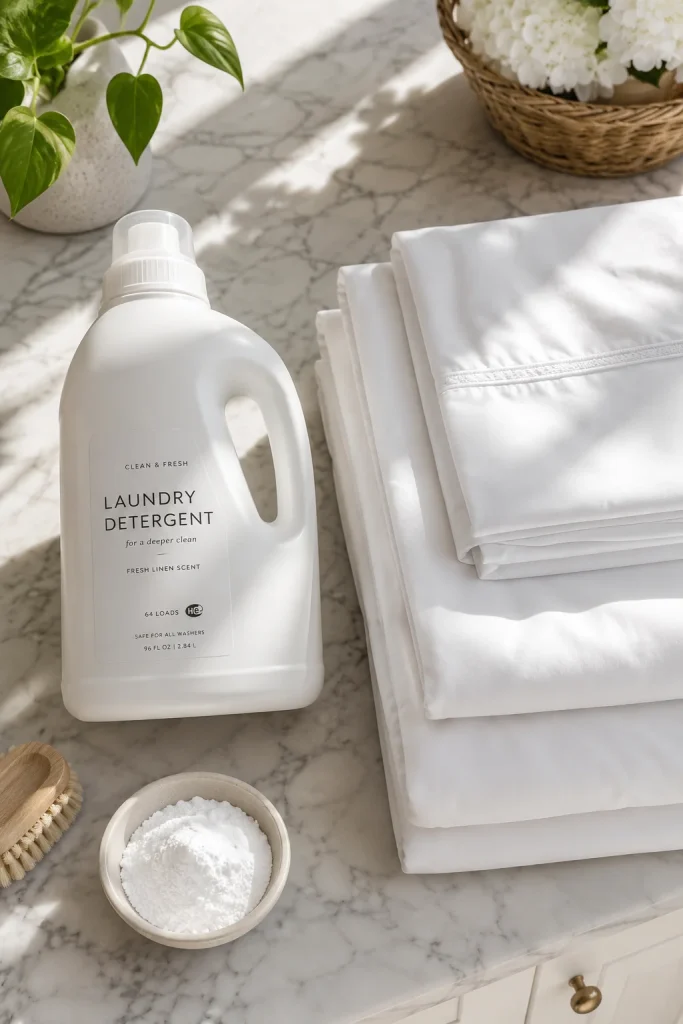
Not all laundry detergents are created equal, and using the wrong one on white bedding can cause buildup or a grey tint. Look for detergents labeled specifically for whites or bright colors. Avoid products with added dyes or strong fragrances, as they can leave residue on fabric. A clean-rinsing formula keeps sheets looking fresh wash after wash.
3. Skip the Fabric Softener on White Sheets

Fabric softener coats fibers with a waxy residue that traps dirt and eventually makes white sheets look dingy. Over time, this buildup is one of the biggest reasons white bedding loses its brightness. Instead, try adding a half cup of white distilled vinegar to the rinse cycle. Vinegar naturally softens fabric without leaving any residue behind.
4. Add Baking Soda to Your Wash Cycle
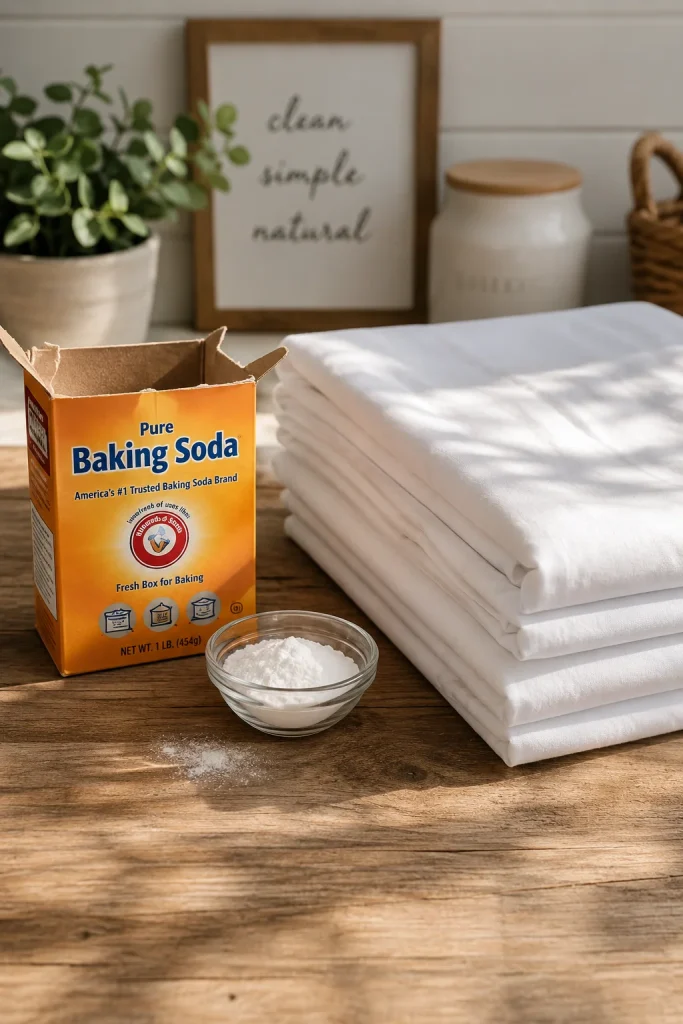
Baking soda is a simple and affordable way to boost the brightness of white bedding. It works as a natural deodorizer and mild abrasive that helps lift soil from fabric during washing. Add half a cup directly to the drum with your detergent for best results. This small step makes a noticeable difference in how white your sheets look after drying.
5. Try Oxygen-Based Bleach Instead of Chlorine Bleach
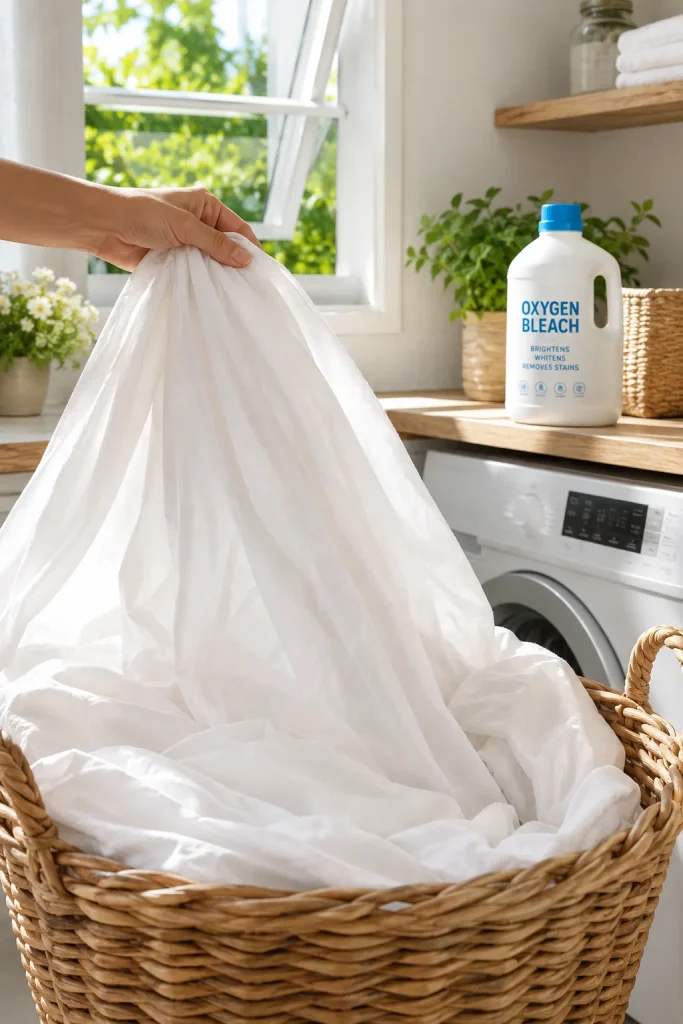
Chlorine bleach is harsh and can actually weaken fabric fibers and cause a yellow tinge over time. Oxygen-based bleach is a gentler alternative that still lifts stains and brightens whites effectively. It is safe to use regularly without damaging the fabric structure. Look for it in powder or liquid form at most grocery or home stores.
6. Sun-Dry White Bedding Outdoors When Possible
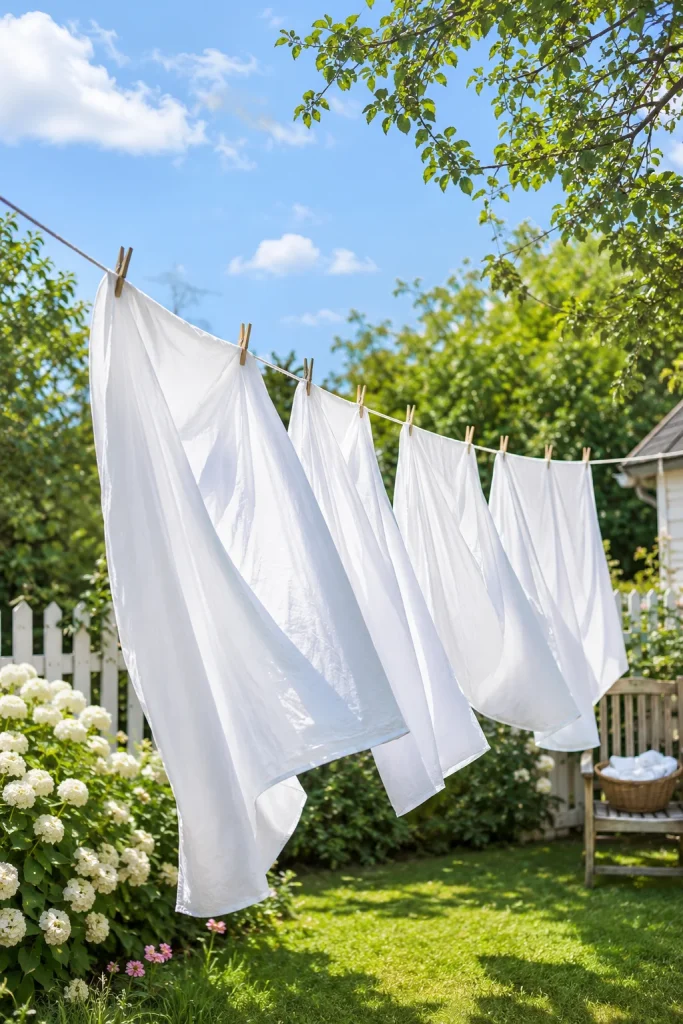
Sunlight is one of the most powerful and natural bleaching agents available to you. Hanging white sheets outside on a sunny day helps kill bacteria, eliminate odors, and naturally brighten fabric. The UV rays break down discoloration in ways a dryer simply cannot. Even an hour of sunshine can noticeably improve the whiteness of your bedding.
7. Treat Stains Immediately Before They Set
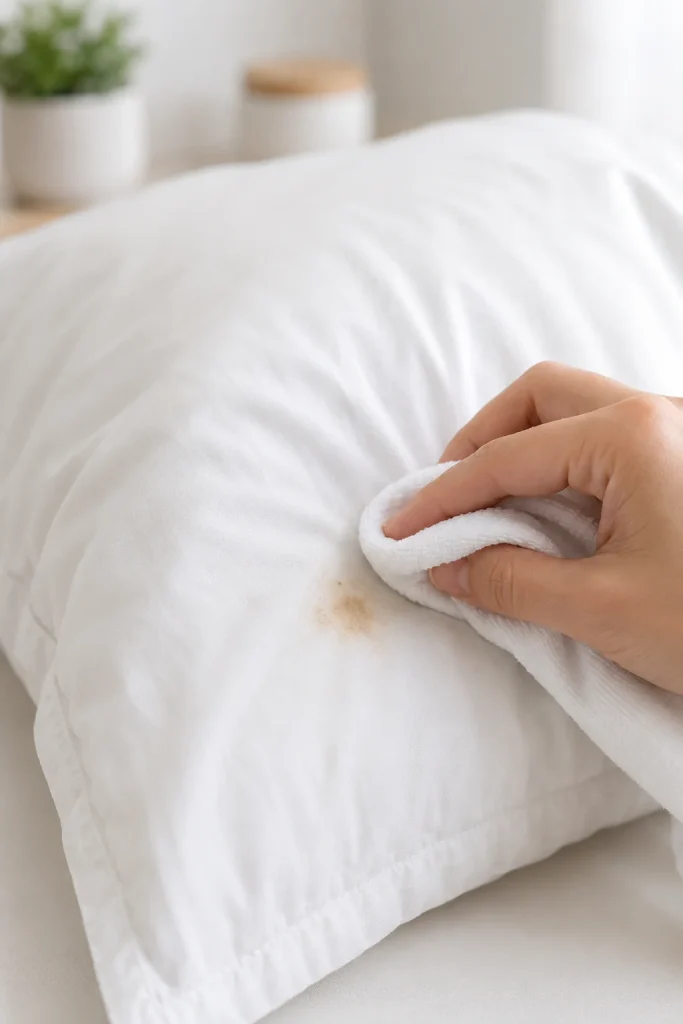
The longer a stain sits on white fabric, the harder it becomes to remove completely. As soon as you notice a spill or mark, blot it gently with cold water and a small amount of dish soap or stain remover. Avoid scrubbing, which can spread the stain and damage the weave. Quick action is the most effective strategy for keeping white sheets spotless.
8. Wash White Bedding Separately from Other Laundry

Washing whites together with colored clothing or towels is one of the fastest ways to cause discoloration. Even lightly dyed items can bleed small amounts of color, especially in warm water. Keep a dedicated laundry load for white bedding to prevent color transfer. This simple habit makes a big difference in long-term brightness.
9. Use the Right Amount of Detergent

Using too much detergent is a surprisingly common mistake that leaves fabric residue and makes white bedding look grey or dingy. Always follow the recommended amount on the detergent package and adjust for your load size. If your machine is a high-efficiency model, use HE-specific detergent in smaller quantities. Rinse thoroughly to ensure no soap film remains.
10. Add Lemon Juice for a Natural Brightness Boost

Lemon juice contains natural citric acid, which acts as a mild bleaching agent and fabric brightener. Add a quarter cup of fresh lemon juice to your washing machine during the rinse cycle for a gentle brightness boost. The citric acid also helps remove mineral deposits from hard water that can dull white fabric. Your sheets will come out smelling fresh and looking noticeably cleaner.
11. Avoid Overloading the Washing Machine

When you stuff too many items into the washing machine at once, nothing gets properly cleaned or rinsed. White sheets need room to move freely in the water so the detergent can do its job effectively. Overloading also causes more friction between fabrics, which can lead to pilling and general wear over time. Wash one set of sheets per cycle for the best cleaning results.
12. Dry on Low Heat to Protect Fabric Fibers

High dryer heat can damage cotton fibers over time, making white sheets look thin, worn, and less crisp. Use a low or medium heat setting to dry your bedding while still ensuring it dries fully. Remove sheets promptly once the cycle ends to avoid wrinkles and musty odors from sitting in the drum. Proper drying care extends the life and brightness of your white bedding.
13. Store Clean White Bedding in a Cool, Dry Place

How you store your white sheets between uses affects how bright they stay over time. Avoid plastic bags or containers that trap moisture, as this can cause yellow spots to develop. Opt for breathable cotton storage bags or keep sheets on an open linen shelf in a cool, dry closet. Proper storage ensures your bedding comes out looking as fresh as when you put it away.
14. Use a Mattress Protector to Keep Sheets Cleaner Longer
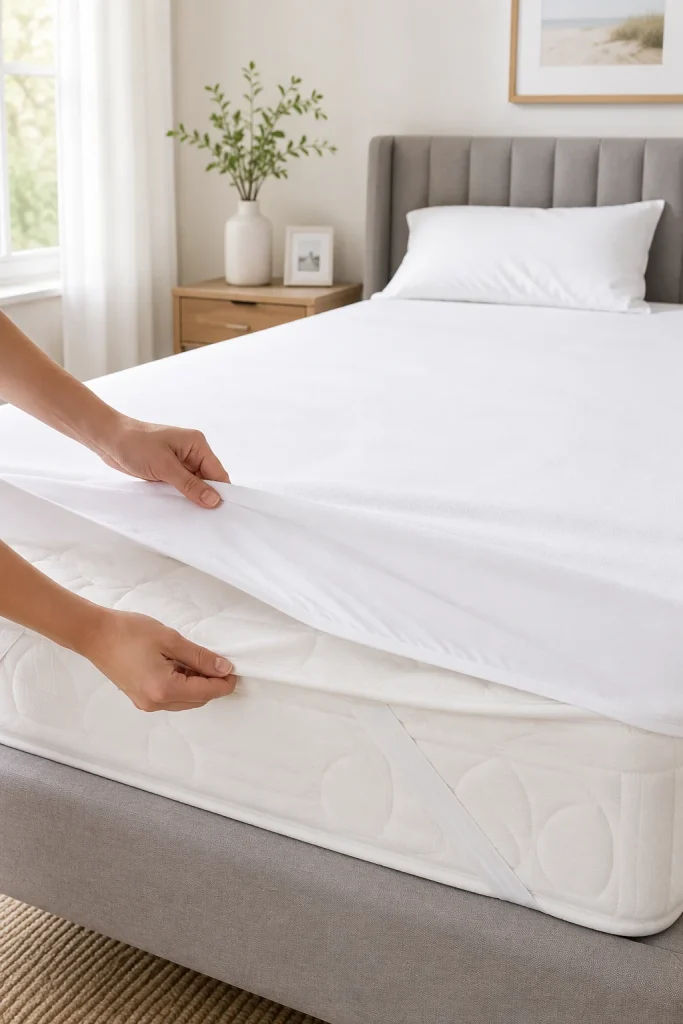
A good mattress protector acts as a barrier between your body and your white sheets, reducing the transfer of sweat, oils, and dead skin cells to the fabric. This means your sheets stay cleaner between washes and require less frequent laundering. Less washing means less wear, so your white bedding stays brighter for longer. Choose a breathable, waterproof option for the best protection.
15. Spot-Clean Pillowcases More Frequently
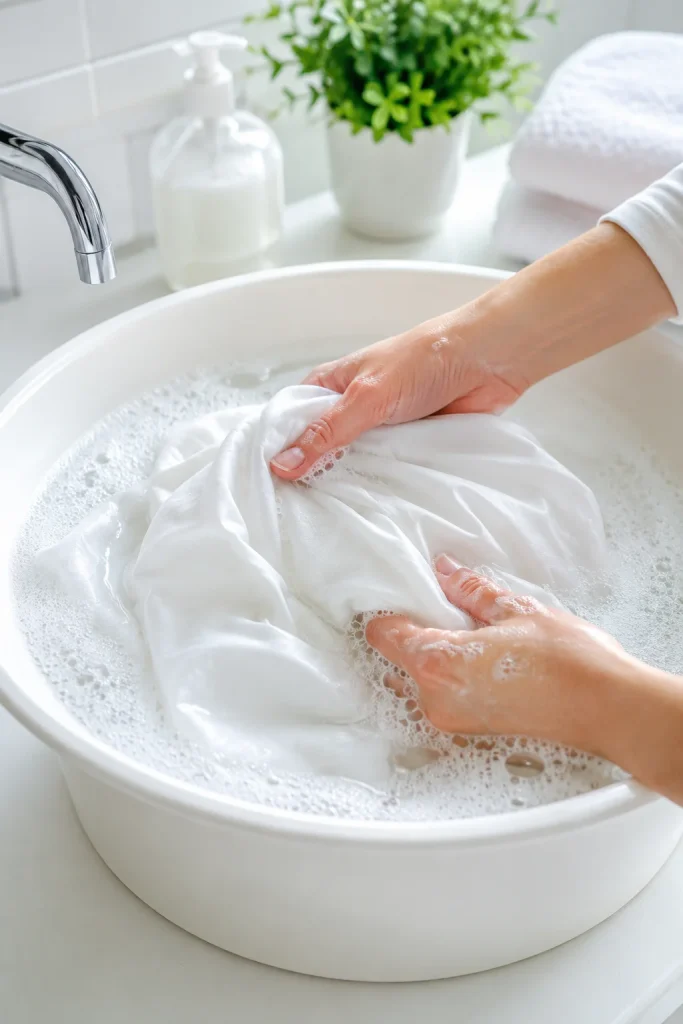
Pillowcases are in direct contact with your face and hair every night, making them the fastest part of your bedding to collect oils, makeup, and product buildup. Spot-clean them with a gentle cleanser between full washes to keep them fresh and white. You can also rinse the pillowcase seams with a bit of dish soap to remove oil buildup before laundering. Giving them extra attention makes the whole bed look cleaner.
16. Try a Blue Laundry Whitening Rinse
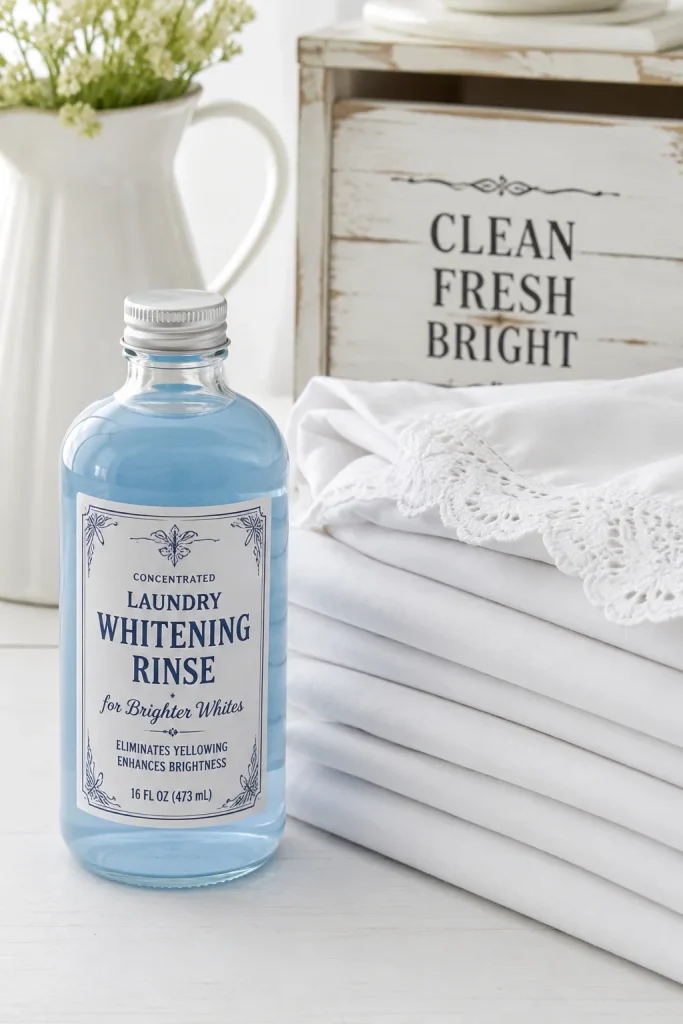
Blue whitening rinses work by adding a tiny amount of blue tint that optically cancels out yellow tones in white fabric. Brands like Reckitt’s Blue or similar products have been used for generations to keep white laundry looking its best. Just a small amount added to the final rinse cycle is all you need. The result is sheets that look genuinely white rather than cream or yellow.
17. Wash Bedding at Least Once a Week in Summer

In summer, your body sweats more, which means your sheets absorb more oils and moisture than in cooler months. Washing once a week keeps bacteria and sweat buildup from turning your whites yellow or grey. Regular laundering also prevents dust mites, which thrive in warm conditions, from building up in your bedding. A consistent washing schedule is one of the easiest ways to keep sheets bright white all season.
18. Use Distilled Water If You Have Hard Water
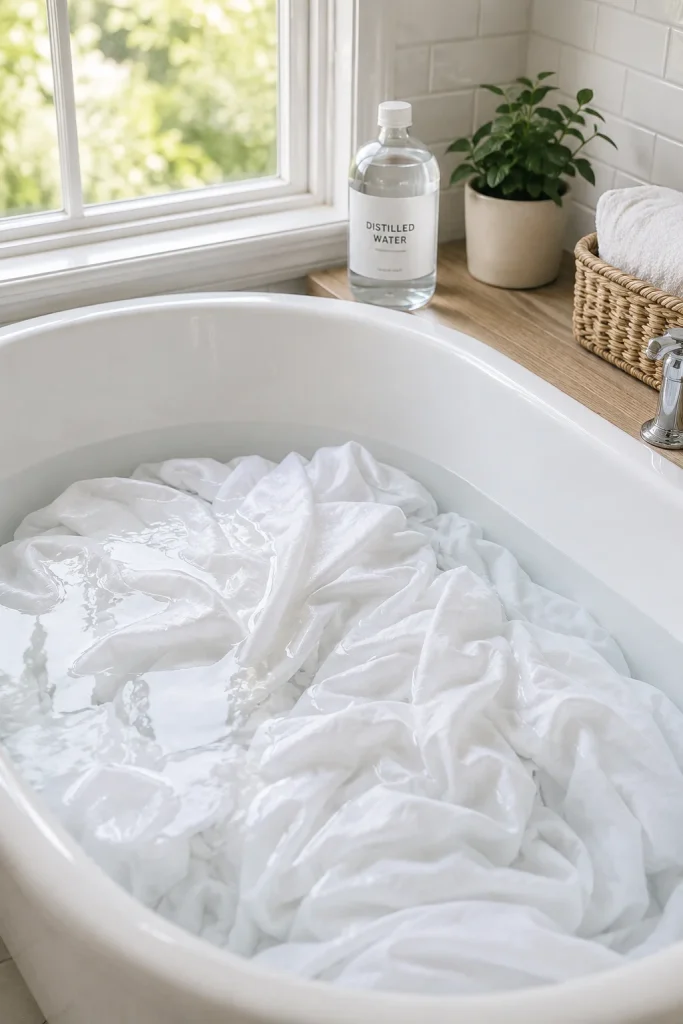
Hard water contains minerals like calcium and magnesium that leave deposits on fabric and can make white sheets look dull or grey over time. If you live in an area with hard water, adding a water softener to your wash or using distilled water can make a real difference. You can also add a cup of white vinegar to each wash to counteract mineral buildup. Tackling hard water is a game-changer for keeping whites looking fresh.
19. Iron White Sheets for a Crisp Polished Look
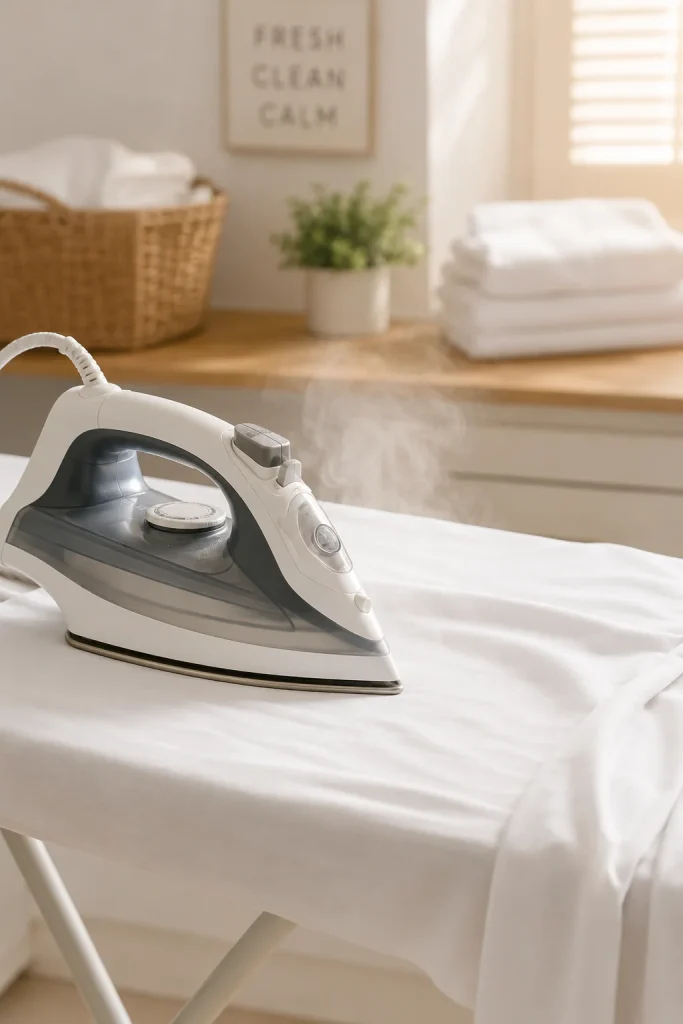
Ironing is not strictly necessary for cleanliness, but it does give white bedding a polished, hotel-quality appearance that enhances brightness. Use a medium-heat setting with a little steam to smooth out wrinkles efficiently. For pillowcases, iron on both sides for the neatest result. Crisp, pressed sheets look noticeably brighter and more inviting on the bed.
20. Avoid Applying Lotions or Oils Right Before Bed
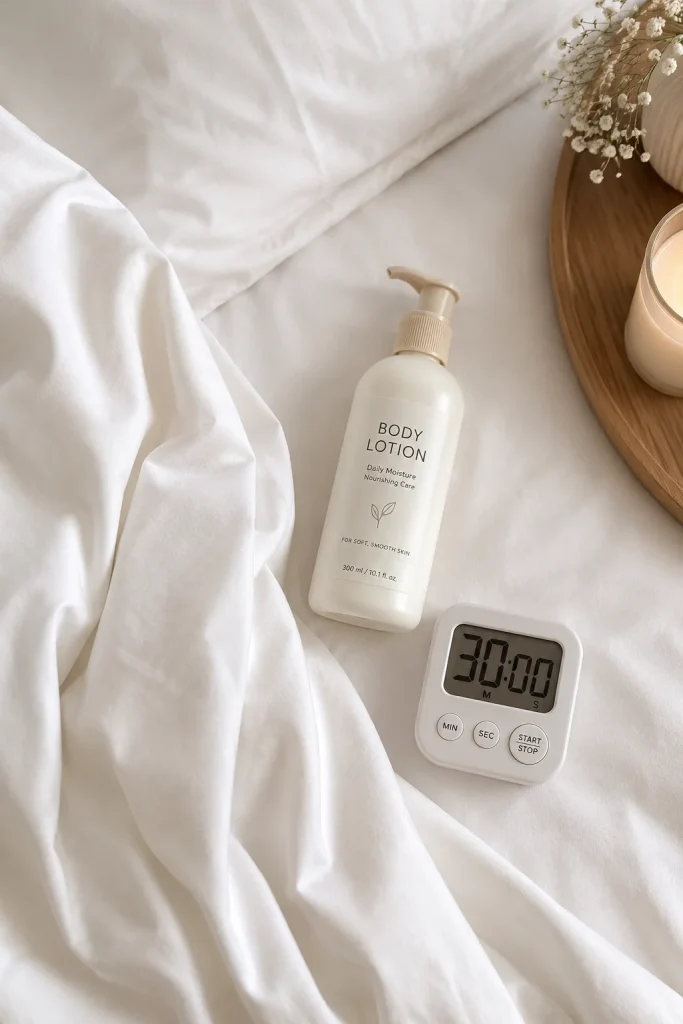
Body lotions, tanning oils, and skincare products transfer directly to your sheets while you sleep and are a major cause of yellowing and staining in white bedding. Try applying these products at least 30 minutes before bed to give them time to absorb into your skin. If you use a self-tanner, consider using a separate set of sheets on those nights. A little planning goes a long way in protecting your whites.
21. Turn Pillowcases Inside Out Before Washing
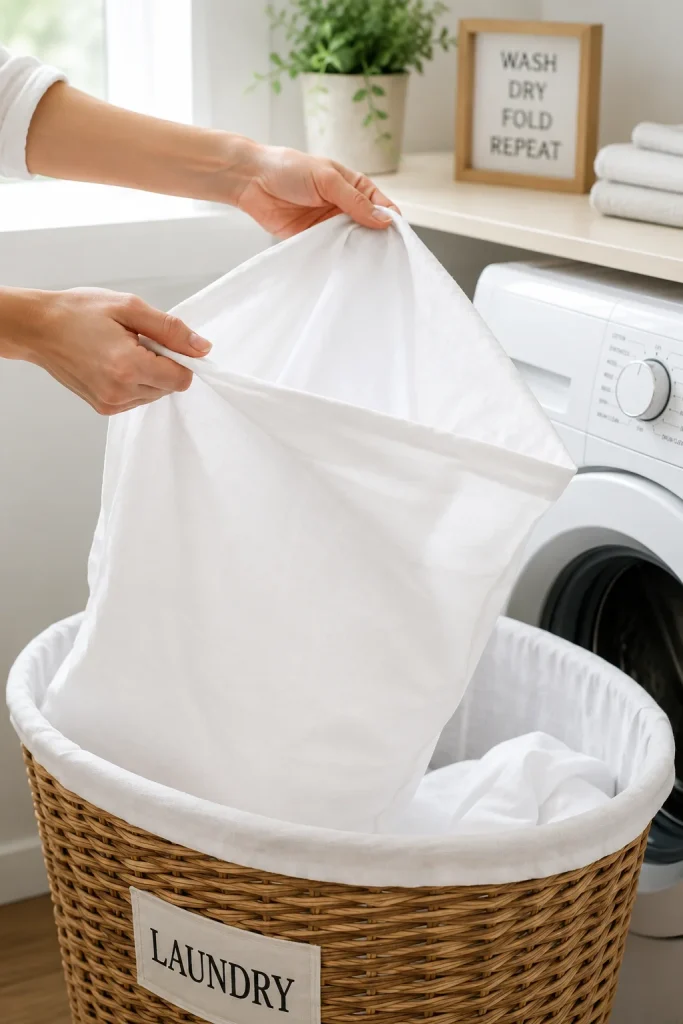
Turning pillowcases inside out before washing exposes the inner surface, which collects the most oils and bacteria, directly to the water and detergent. This technique ensures a more thorough clean and helps prevent the outer fabric from looking faded or worn. It also protects any embroidery or delicate finishing on the outside of the pillowcase. This small step makes each wash more effective.
22. Use Dryer Balls Instead of Dryer Sheets
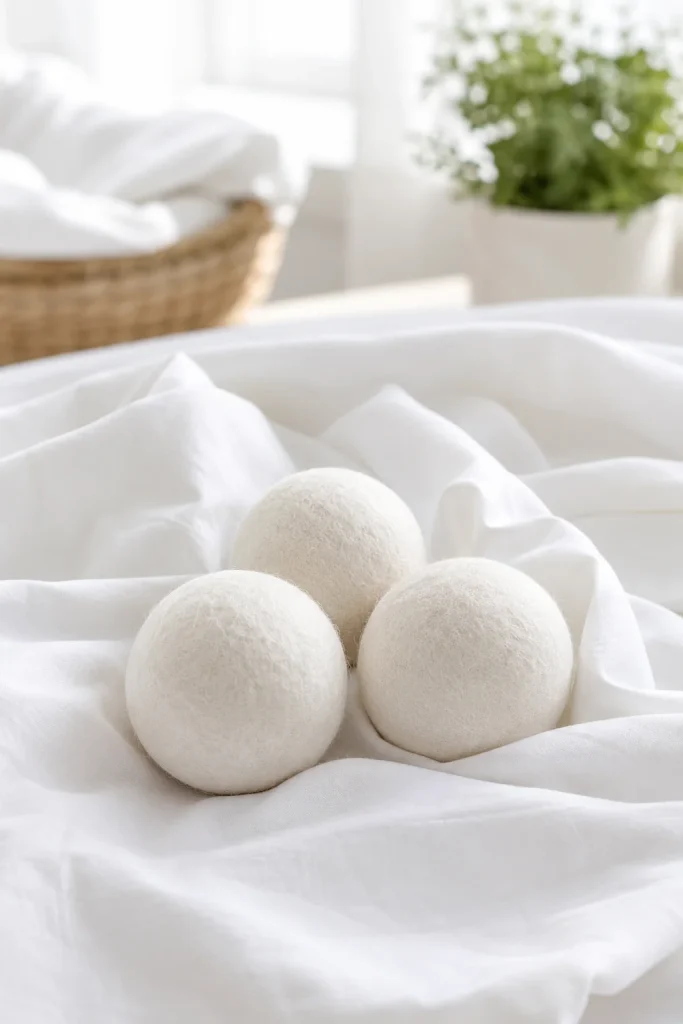
Dryer sheets leave a thin coating on fabric that can build up over time, making white sheets look less bright and feel less absorbent. Wool dryer balls are a natural alternative that reduce static, soften fabric, and speed up drying time without leaving any residue. They are also reusable for hundreds of loads, making them both economical and eco-friendly. Your sheets will come out fluffier, cleaner-looking, and brighter.
23. Pre-Soak Heavily Soiled Sheets Before Washing
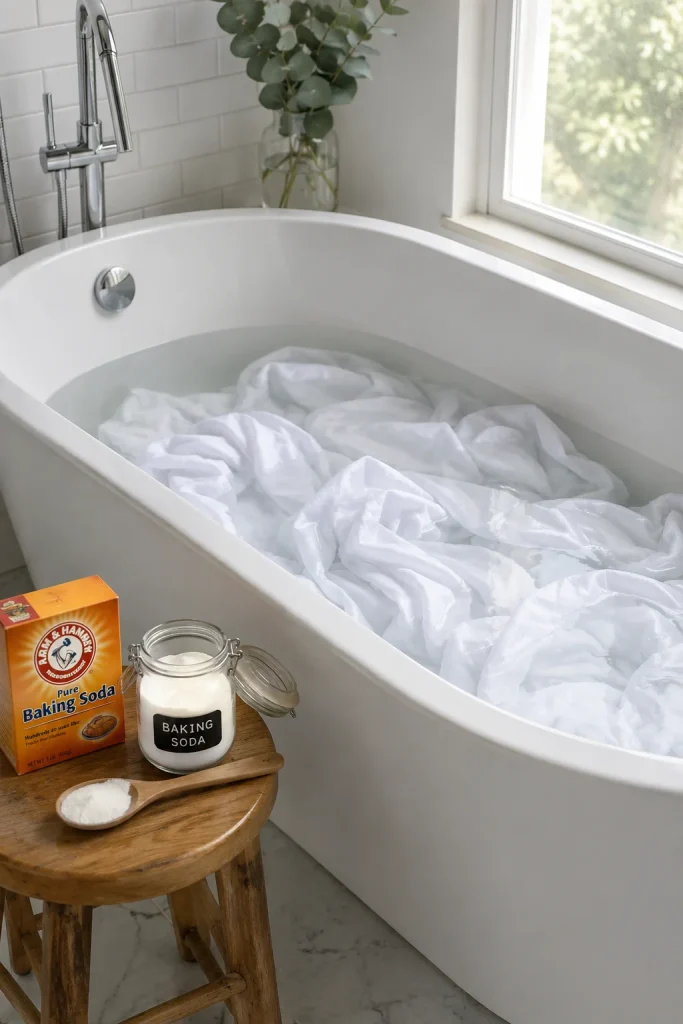
If your white sheets have been through a particularly sweaty summer week, a pre-soak before washing can make a big difference. Fill the tub or a large basin with warm water, add a scoop of oxygen-based bleach or a cup of baking soda, and let the sheets soak for 30 minutes to an hour. This loosens buildup and makes the main wash cycle more effective. Pre-soaking is especially helpful for sheets that are starting to look yellow.
24. Choose High-Quality White Bedding to Start
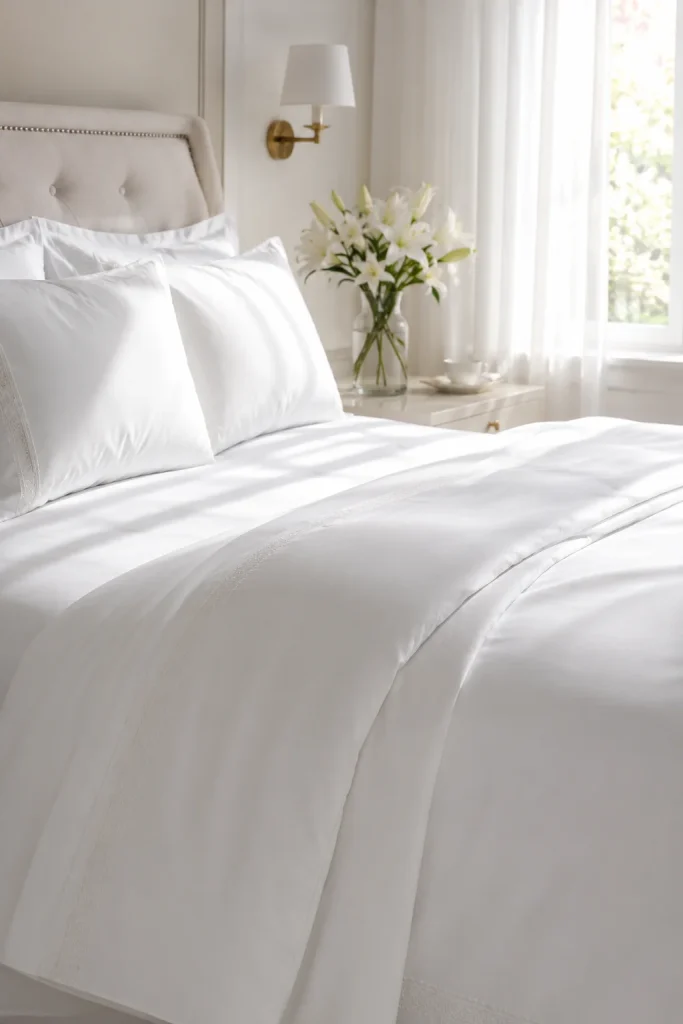
The fabric’s quality plays a big role in how well it retains its brightness over time. High-thread-count or long-staple cotton weaves resist pilling and staining better than lower-quality options. Investing in good bedding from the start means you spend less time and effort trying to bring dull sheets back to white. Look for certifications such as OEKO-TEX to ensure the fabric is free of harmful dyes or finishes.
25. Refresh White Bedding with a Vinegar and Baking Soda Soak
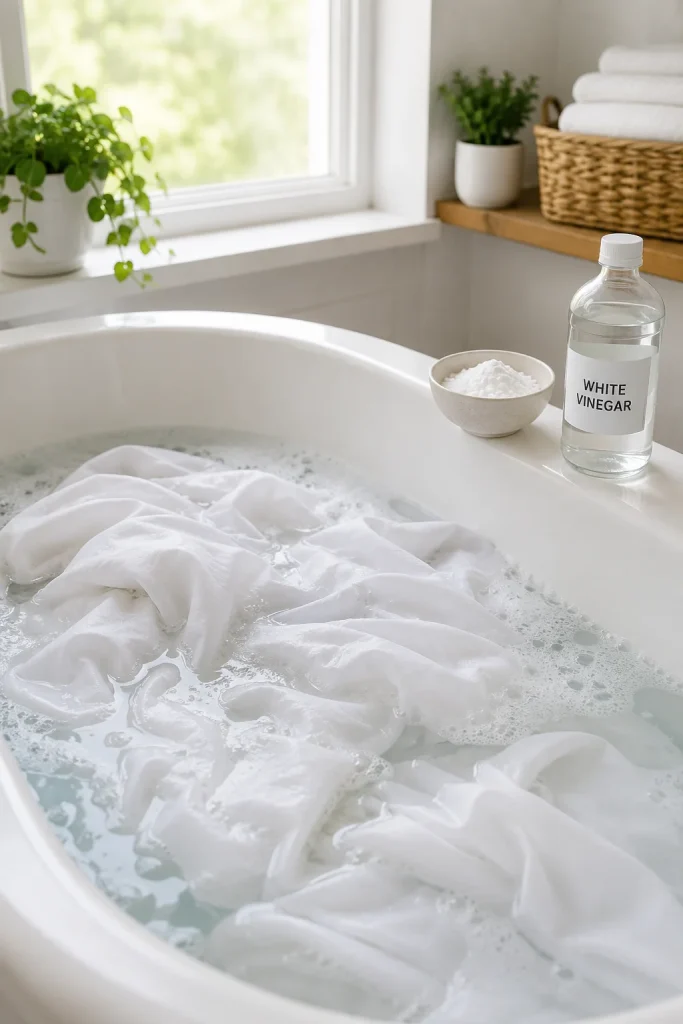
If your white sheets have gradually lost their brightness, a vinegar-and-baking-soda soak can help restore their brightness. Start by soaking the sheets in hot water with one cup of white vinegar for an hour, then drain and wash normally with baking soda added to the cycle. This combination breaks down mineral deposits, removes odor, and lifts built-up residue from the fabric. After this refresh treatment, most sheets come out looking noticeably whiter and cleaner.